
Amélie and her composer
Yann Tiersen, the Amélie soundtrack and twenty-five years of a complicated relationship

April 17, 2025
My sister and I were last in line. There’s a creative edge to Bristol’s Rough Trade in the evening. It’s dark and the floor is sticky from craft ales and vodka shots. With rows of neatly placed vinyl, I imagine the nomads who fill HMV’s local store wander here as dusk falls. We’d been watching Yann Tiersen perform live for the last couple of hours in the naive hope that he’d treat us to the French sounds of his accordion or piano, as we got high on the Amélie (2001) score. 24 years had passed since the film’s release but it seemed that, for this artist, that was then and this was now.
Based on rigid and stiff-swaying postures of others in the cosy stage area - a cramped and dark room with a small podium - we weren’t the only ones who came hunting for a taste of Parisian nostalgia. We would all end the night disappointed.
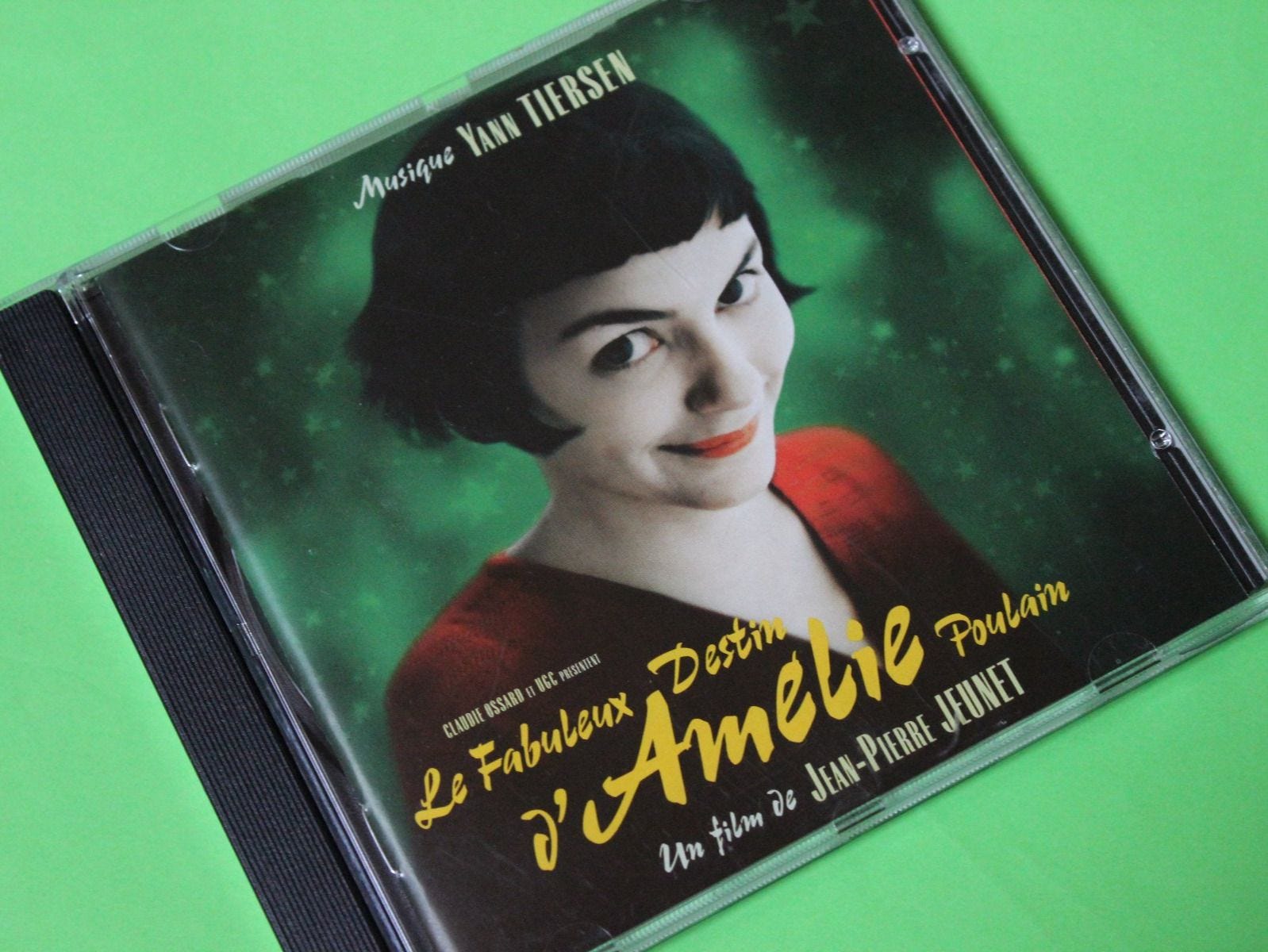
Tiersen patiently sipped his drink for most of the set (I surmised from its cloudy and amber tones, it must be a local IPA from the bar) as he performed his new album; composed whilst sailing past Ireland, Scotland and further up the North Sea to the Faroe Islands. His demeanour wasn’t stormy, but he had a breeze about him that never seemed to settle. As I sat with my sibling, beer in hand, she retrieved her CD to remind me of the title: The Liquid Hour. I’d left my copy at home but she wanted hers to be signed and - thinking about our impending encounter - I knew I wouldn’t have the courage to tell Tiersen the album in question was “alright, actually”.
As I drank up and we ambled to queue, I felt a tinge of disappointment. I adored the film and once had an over-sized poster of Amélie in my study as a reminder of feelings it would leave me with. Amélie made it cool to be quirky and eccentric. I’d felt seen and alive every time I watched it. Whenever I travelled to Paris I stayed near Montmartre, cherished the views of the city from the Sacré-Cœur and drank in the movie’s famous Café des Deux Moulins (a now tired and drab spot that’s a two minute walk to the Moulin Rouge). I was a giddy touriste.
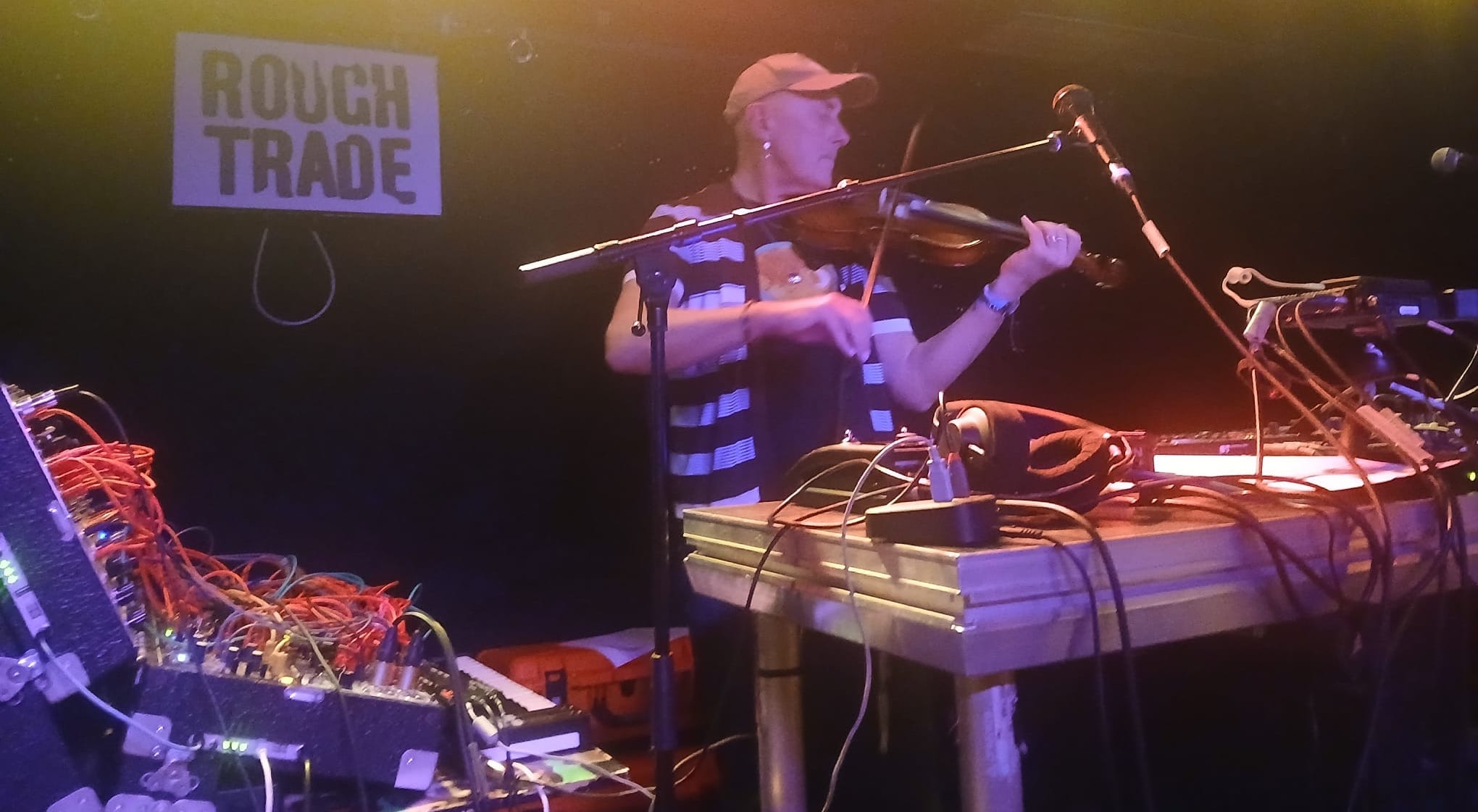
Little did I know that, in the coming minutes, Tiersen would perform an encore for an unassuming couple. Without wasting words, let’s just say these two were fans of the film, as posters, DVDs and other items of fandom were dumped on the counter for the artist to sign. The composer’s patience finally betrayed him, as if these items had looted the fragments of any artistic identity that remained.
My role as voyeur intensified. Tiersen manoeuvred himself closer to the poster of Amélie and drew a small black moustache between the top of her lip and bottom of her nose. Colloquially, this was a “Hitler moustache”. The couple looked confused. Ending a brief silence, with a smirk deflating the creases on his forehead, he clarified this stance: “I only sign these posters, this way”. My sister glanced at me before he finished. “This is a racist movie”.
That interaction with a composer from one of cinema’s most appreciated soundtracks, as well as one of my personal favourite films, sparked my intrigue. This is the story of Amélie and her composer.
The reaction
“Let him return the money!”, were the words of the self-identified right-wing lawyer Charles Consigny, a regular commentator on popular TV and radio shows in France.
This was in late 2025 and his scathing assessment of Tiersen’s recent comments on the film, during an interview with Libération (a daily national newspaper in France) in October, was followed up by a generalised criticism on the culture of cinema in Paris:
“In the cinema, you are obliged to show your belonging to a party. The small Parisian cultural world works like this. So right now, if there is not one in two characters who is trans or racialized... you are no longer part of the group.”
Barbara Lefebvre, another regular commentator on the current affairs debate programme - Les Grandes Gueules, where Consigny made his remarks - went further with her condemnation of the musician:
“I hope he donated all the money he earned (from the Amélie soundtrack) to help migrants! You have to be consistent in life. Let him return the money to SACEM”. The Society of Authors, Composers and Publishers of Music (SACEM) is the body in France that collects payments on behalf of artists, distributing these to songwriters and composers.

The host of the radio show, Olivier Truchot, defended the work of Jean-Pierre Jeunet’s direction of Amélie: “He didn’t want to make a documentary”. And responding to some of Tiersen’s views of the movie: “It’s a film that holds up but is not intended to be realistic. Jean-Pierre Jeunet proposes an approach to an imaginary Paris close to comics”.
Tiersen earns an estimated $36,900 a month from Spotify streaming. Across his catalogue, the Amélie soundtrack has received approximately 1.16 billion Spotify plays, against about 130 million for Cascade Street (1996), his most popular standalone album. Figures are provided by Chartmasters and Kworb data. The latter source covers Spotify only.
Adoration
Amélie has received plenty of adoration for its feeling of a postcard Parisian life, and how a shy and unassuming woman battles with herself in pursuit of love. Sensory stories within a story. The quiet cracking of a crème brûlée. The soothing feeling of a hand sinking into a basket of grains at a quiet market. Thoughtful collection of smooth pebbles so, when they’re gently thrown, they skip ever-so-effortlessly over water.
A romantic who notices life’s little moments. Turning her head to peek behind and gaze at people’s smiles at the cinema. The green, yellow and reds: splashed throughout the city’s scenes, and extra vivid and visible in the safe imaginative sanctuary of her apartment. The place where shyness dreams and fantasies come alive, as paintings of dogs converse with pigs disguised as lamps. A mind that will forever stay young, one that remembers crocodile friends and suicidal fish from her formative years.
The unique and sacred heart whose therapeutic deeds for oblivious locals are invisible and sincere. Gripping a blind man by the arm and marching him down the street as she narrates with fervour and glorious detail. His face beams. He is alive. Acts of generosity that fracture a middle-aged man’s ego and reunites him with his childhood, and an estranged family. Age brings pessimism and scorn to some, but she finds a way to dissolve their atrophy of joy: the garden gnome travels the world. She plays cupid and fires arrows where they’re in desperate need. Yet, what she sees in others is with compassion and devoid of judgement.
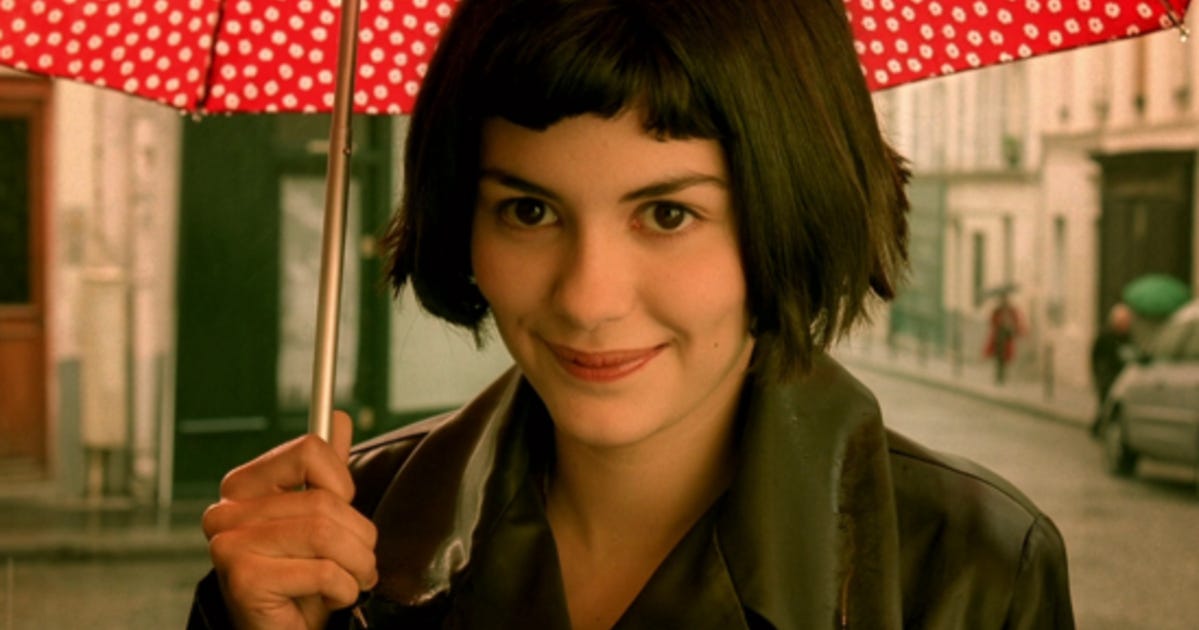
Amélie doesn’t need (or want) to change. Loneliness is not the word, but the Glass Man is right; she “is in the middle of it, yet she seems outside it all”. But there is no pity-party. No tears rolling down her cheeks. She understands who she is. Accepts. A quiet confidence that extends a determination to defend others. The grocer is a bully. Payback is righteous.
The Eiffel Tower and Sacré-Cœur. The metro. All French. Like the accordion that is in peaceful agreement with the piano, and elevates everything on screen. Music mirrors her experience, as if it’s yet another thing she imagines. As if the pace and rhythm to each scene is her melodic interpretation. Sometimes anxious, sometimes magical. Mostly still, contemplative. Peaceful. All in harmony.
Adore, from 10th century France. From the Old French aorer “to adore, worship, praise”. Amélie worships life’s little moments. Audiences cherish her story. Many still adore Jean-Pierre Jeunet’s 2001 film.
The soundtrack
Amélie’s opening credits begin with charming images of Montmartre, as the bassy accent of the narrator tells her origin story. On the amber tinted screen is a cobble-stoned road as a small vintage-looking car enters (indecipherable to the untrained eye, but imagined as a Citroën) and a quiet announcement of an accordion slowly rises. The next few shots tease the Eiffel Tower in the distance as the camera looks upwards to the perfect image of the Sacré-Cœur in the background. Strings have been added and the first track from the film’s soundtrack - “J’y suis jamais allé” - plays. It has a French folk feel to it, and the accordion offers a high-energy carnival feel with a xylophone decorating the scene with magical dust.
The second part of Amélie’s backstory is less theatrical, and we meet the young girl for the first time. The lighting is tinted green as a montage of what appears like home video footage plays against a softer sound, giving a contemplative impression. Maybe even melancholic, as piano notes from “La Dispute” tinkle.
The narrator has left us. We’re being invited to take in the young girl’s solitude and the birth of her imagination, as she makes faces from fingers and wears small hanging cherries over her ears. The scene finishes with the sound of a bicycle left spinning, a creative stamp from Tiersen, and the movie begins. The opening credits are roughly three minutes, but in that time everything about Tiersen’s composition, and the feelings it evokes, are portrayed.
![Amelie – [FILMGRAB]](https://substackcdn.com/image/fetch/$s_!9j9l!,f_auto,q_auto:good,fl_progressive:steep/https%3A%2F%2Fsubstack-post-media.s3.amazonaws.com%2Fpublic%2Fimages%2Fbf4a8498-c2e0-492b-8cb0-12fd76558f77_1018x436.jpeg "Amelie – [FILMGRAB]")
This mix of a spirited sound and mystique with a yearning and lonely feel, sprinkled with quirky experimental samples, typifies Tiersen’s catalogue up to that point and was surely why the director sensed he was the right composer for the film. The artist had already released three albums and was in the process of creating his fourth by the time that Jeunet contacted him. The director spoke about his musical choice a few months after the film’s release:
“I had something else in mind and then one day a production assistant drove me somewhere and put on a CD I didn’t know, which I found absolutely superb. It was a piece by Yann Tiersen. By that evening, I owned all his records! I met him and right away, we got along very well. Over the course of two weeks, he composed nineteen pieces for us! In addition to that, he allowed us to take anything we wanted from his other records. The hard part was making a selection, because all his tracks worked with the film’s images!”
Tiersen reflected on this experience a year after the film’s release:
“He (Jeunet) started to search for material from my previous albums, then I added some new tracks. Sometimes he replaced tracks he chose from my old albums with new ones”.
This, partly, explains how the soundtrack was created in such speedy time. The two tracks used in the film’s opening credits (”J’y suis jamais allé” & “La Dispute” ), for example, already existed on two of his earlier albums. Half of the album’s music was repurposed from his catalogue, with the remaining tracks newly composed.
In earlier albums, he’d been sampling with all of the sounds that make up the score: synths, an accordion, wind instruments, toy pianos, harpsichords, violins and even recorded the sound of a typewriter, saucepans and the aforementioned bicycle wheels.
This cocktail of creative enquiry, heard by the ears when listening to the soundtrack, is one of the reasons why it convinces us of something that sometimes can’t be fully expressed. It blends Parisian romance, melancholy and reverie. The entire soundtrack is splendid but certain tracks are still resonating the most with audiences: “Comptine d’un autre été: L’Après-midi”, a beautiful piano piece that captures a wistful and yearning sadness.
There are a few versions of the impressive “La Valse d’Amélie”. In the piano version, Tiersen begins with soft touches of the keys - as if Amélie’s introversion begins to withdraw her from realising the things she imagines - but the rhythm and intensity increases, with spirit and renewed confidence. Another variation of this track uses a toy piano along with a violin. Like the character, it’s playful and imaginative. Track three’s version plays with a prominent accordion, as if we’re bouncing up and down with Amélie whilst circling on a carousel. It instantly changes the mood; a lifting and energetic feel that evokes the final scenes of the film as Amélie and her new lover Nino ride together on a motorbike, breaking the fourth wall as they make silly faces at the camera.
To be honest, there are simply too many great pieces of music to describe, but they all linger around the sounds and sensations of those opening credits. Note also, that the full soundtrack, with all twenty tracks, doesn’t live on streaming platforms. If you ever needed an excuse to purchase a CD or vinyl, Tiersen’s Amélie might just be it.
But, it’s still unclear why Tiersen is prickly about the sound of the music, and the film in general. Some years after the film’s release he would hint at friction with Jeunet, and the director’s desire to change some of the score’s names which he argued were “nothing to do with the music”. These early seeds of discontent would eventually grow into his rotten view of the film. If Amélie’s music is sweet and delicious for audiences, the taste is bitter with her composer.
Les critiques
“..where are the Caribbean people, the North Africans, the Turks, the Chinese, the Pakistanis, etc.? Where are those who live a different sexuality?”
Serge Kaganski, French film critic in 2001.
To begin to understand Tiersen’s hostility with the film, it helps to appreciate his roots in Brittany. His comments are scattered over time (this quote below is from 2014) but it’s as if he has been trying to find the words for his feelings:
“Technically and legally I’m French but from where I come from, the culture is really different compared to France”.
His roots are Celtic and it’s no surprise that his later albums involved tours around Cornish and Welsh regions, in search of ancestral inspiration. The Britons migrated to France in the 5th and 6th centuries after the decline of Roman rule in Britain. If Amélie’s soundtrack has an accordion feel in some of its tracks, it’s from these roots. Tiersen’s impressive earlier album Cascade Street characterises this ancient and ethereal sound.
“Where are the Parisians who populated the capital in 1997 (the year the film is supposed to take place)?”
Kaganski in 2001.
“The Parisian folklore and the ‘Frenchness’ of the movie was really far from my music,” he later explained to The Independent. “There has always been a context where it’s naïve, but also dark and linked to death. Even something like the accordion for me felt more Celtic, and nothing to do with that film. For a while after I didn’t play the accordion at all, because I thought it was disgusting.”
Those words, shared in 2019, captured what seemed to be regret around his affiliation with the film; “It had more of a negative impact instead of positive”.
He continues.
“The first time I saw the movie was in the cinema - I didn’t want to go to the premiere - and I remember it felt really personal, and weird. If I was asked to do it again, now I would say no.”
Kaganski - in 2001 - suggests the film could be used by Jean-Marie Le Pen, of the National Front (a French far-right political party), “for a video to illustrate his speeches, to promote his vision of the people and his idea of France, it seems to me that Amélie Poulain would be the ideal candidate.”
“I did soundtracks by mistake or by chance, and after Amélie I just did two (Good Bye, Lenin! and Tabarly). For me, composing music isn’t too serious, it’s really organic and instinctive, and it doesn’t fit with soundtracks when you’re working with a director who says things like ‘I’d like the music to be orange’ and other stupid things like that. It makes me crazy.”
But we have to go back to the 2014 interview, once more, to sense dissonance in his words. An artist who is continuously experimenting with his music, but someone who appears in a self-imposed prison by a film that was shot in a place alien to his life in Brittany.
“I am happy with it, it’s a good film to have my music featured in but on the other hand, it is really far from what my music is about right now. I am also really far from the Parisian scene and though I am proud of it, I’m also a bit embarrassed because Paris is almost a concentrate of what I really hate; I hate Paris and people always think about it when listening to that soundtrack so, it’s strange to be associated with that since it’s far from me”.
“If it had to be done again, the tone would be less virulent, and I would remove the last paragraph: the reference to Le Pen was probably a big blunder, first because it spoke again of a forgotten politician, then because this sentence was the brown rag on which many rushed, obscuring more or less the rest of the text.”
Kaganski in 2017, reflecting on his scathing review of Amelie that was published in 2001.
Back in early 2010, Tiersen aimed his irritation towards Amélie fans who were attending his concerts.
“Maybe it’s rude but I don’t want them at my gigs.”
Maybe his deeper thoughts about the film were shared in private, but it wasn’t until his 2025 interview with Libération - which caused radio debaters, like the responses heard earlier in Les Grandes Gueules to vehemently react - that his perspective seemed to calcify:
“I lived in Paris, and it was not Paris.
What I like about this city is its mix, its cosmopolitanism.
Fantasize about a white Paris, even in the early 2000s, where the only employee is Jamel Debbouze (who plays the character, Lucien)...
It’s racist.
It has always bothered me.”
1998
France won their first World Cup in 1998, playing out a 3-0 win against Brazil in Paris. Zinedine Zidane, whose Algerian parents moved to the country in the 1950s, scored two headed goals. The French squad demonstrated the beauty of multiculturalism: players born in New Caledonia and Senegal; sons of immigrants from Martinique; representatives of the French Basque-regions; others who had Polish-Armenian and Spanish-Portuguese heritage. The president at the time, Jacques Chirac, called this moment a “beautiful image of France and its humanity”.
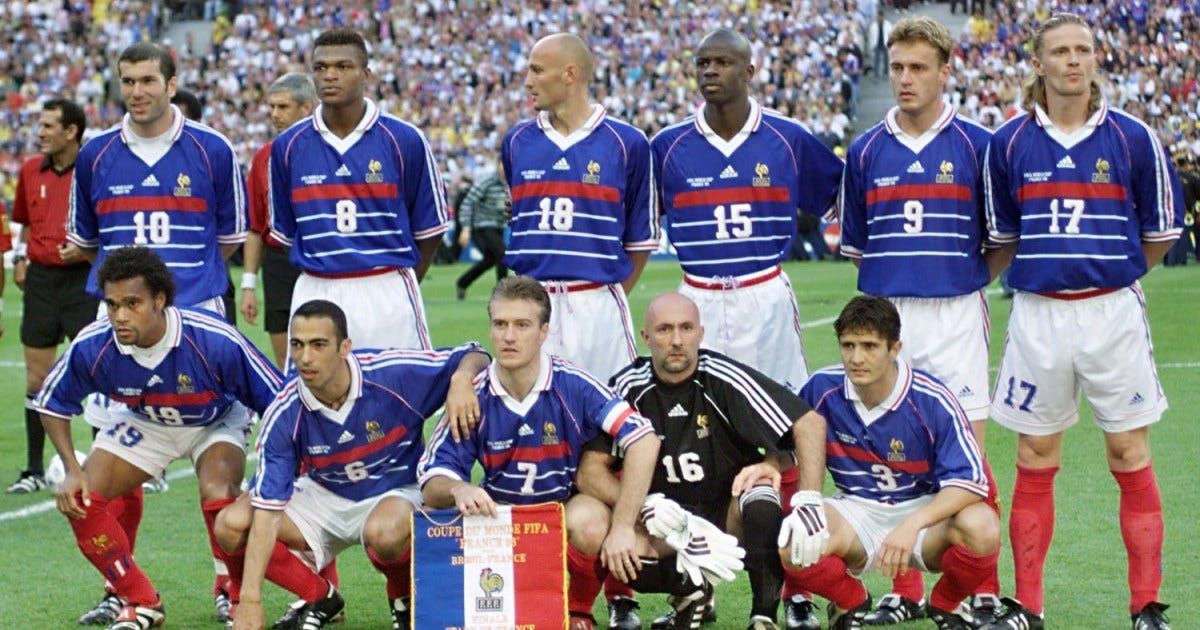
Another player who started the final that evening was born on the French Caribbean island of Guadeloupe, moving to Paris at the age of nine. His name was Lilian Thuram and he would become an ardent campaigner against racism, eventually setting up his own foundation in 2008. He would later reflect on these times as progression in disguise. Indeed, right-wing politician Jean-Marie Le Pen attempted to politicise the World Cup win to suit his own ambitions, saying it was “a bit artificial to bring players from abroad and call it the French team”.
Three years earlier La Haine (1995) was released. A gritty and unpolished film showed the brutality of a poor immigrant neighbourhood in Paris, following the lives of three friends across a day and night. Each character represents the collective issues that were affecting minorities in the suburbs: an Arab (Saïd), a Jew (Vinz), a black man (Hubert). The movie felt authentic in showing the social conditions they were exposed to, capturing a sense of realism that leaves a sobering impression. The director, Mathieu Kassovitz, would go on to play Nino in Amélie and it’s hard not to sense a connected thread in both movies. If La Haine gave voice to a hostile tension brewing in the city, then France’s 1998 win was the elixir. A moment to celebrate progression and collective unity.
Three years after the World Cup win, Amélie was released. To timestamp the movie and orientate the watcher, Princess Diana’s tragic death in 1997 is reported on TV which leads to Amélie eventually finding a hidden box of childhood souvenirs.
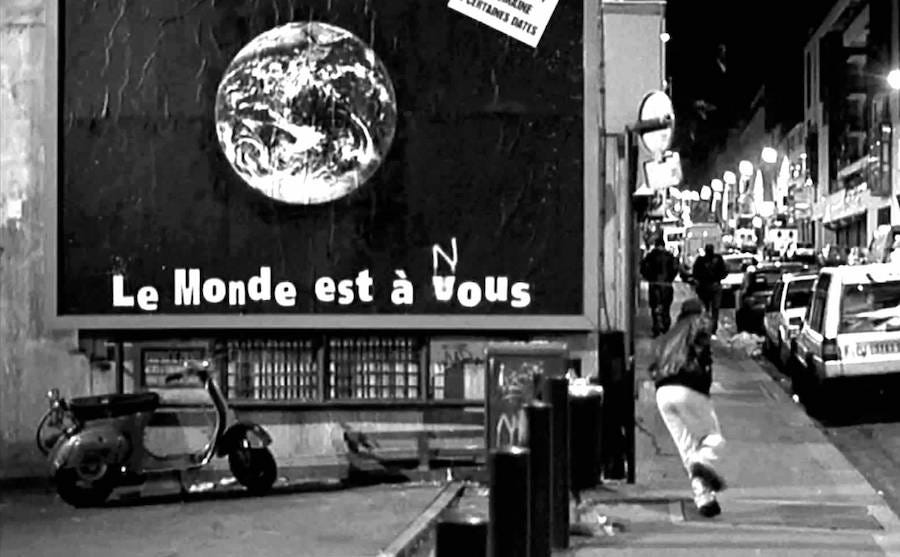
All of this is context. And the context of the film, when these circumstances are considered is interesting. La Haine would show three youths, of different ethnic backgrounds but all French, as victims to police brutality, exposed to the destitution of the suburbs. If this was an authentic snapshot of Paris then these youths, imagined in real life, could’ve felt recognised and empowered by the diverse World Cup-winning squad.
With this context should we consider the criticisms aimed at Jeunet’s Amélie, that digitally removing graffiti and cleaning the city to achieve his filtered vision of Paris didn’t represent the Parisians Kaganski was talking about?
As Thuram would put it later, when discussing the team’s affectionate slogan of “black, blanc, beur” (black, white and Arab) after their success: “it wasn’t only a reference to the football team, it was about all of society”.
The World Cup trophy seems to hold these two films together. The left hand extending back in time to La Haine in 1995, the right hand stretched out to 2001 with the French team, and their story of multiculturalism, glowing in the middle. Amélie’s romantic and edited Paris, full of warmth and colour against La Haine’s sobering black and white story. The players, fans and politicians in the middle, searching for a sense of themselves in both films.
August 2026
Whilst I didn’t have a CD signed when I met Tiersen in Bristol he did scribble on my cast, freshly set after breaking an arm during a football game. He had a relaxed demeanour and politely asked me how the injury happened. One thing that has become apparent when researching Tiersen is how thorny he can come across in written words compared to his softly spoken and considered English. His need for creative freedom is clear, both in his words and his catalogue, and it’s a shame he doesn’t want to make any film scores in the future because we won’t be hearing tracks like “Summer 78 (1)” from Good Bye, Lenin! and its soft melancholic piano. Maybe what Amélie feels like to him is an artistic prison; he’s destined to be forever linked to the film. Whether he wants this or not.
I approached this article with honesty in my research and wanted to pursue Tiersen’s perspective, and broader context, when he made those comments in Bristol. His accusations of racism would publicly arrive months after our encounter and I have little doubt he had been grumbling to fans for some time. What also struck me was how many interview articles over the years include the film’s name in the title, yet discussions about the film are, in reality, minimal. Perhaps he knows publicity for his tours requires a begrudging deal with his creative devil. Or maybe journalists are restricted to one question about you-know-who. I watched one of his recent interviews online which corroborated his delicate and artistic nature, but it was laughable how the host apologised about even the thought of asking a question about Amélie, holding their hands up with an air of defensive anxiety. Nonetheless, the show’s title still read “Yann Tiersen: Beyond the Amélie soundtrack”.
What is clear, to me, is the dissonance that Tiersen is living with in relation to the film. He speaks with authenticity about living his life with intent when he says “Music for me is a way to be true to myself”. His website includes Spotify links for all of his albums and film soundtracks, with the exception of Amélie. Yet, the movie’s score sits on his Spotify page.
On the criticisms from him, and elsewhere, I wondered: would Amélie get made today? I believe so, but I think it would receive a lot more scrutiny for its apparent lack of diversity and the post-editing that gave Paris its magical-realism would invite further interrogation. But to defend Jean-Pierre Jeunet, the director had already spent a lot of his earlier works in animation, which he studied. So making changes, upgrading the prettiness of Paris; this was easy to him. Then consider he was collecting stories and quirks seen in the film throughout his life and didn’t randomly conjure up his story. The film was intended to be a small personal project, something he had been planning for years. Jeunet’s context and narrative is lost in the current discussions on the film.
I wondered what Audrey Tautou would’ve thought, had she known about her face being modified on posters. But it’s clear to me that the film is not racist and I’m still reflecting now on Tiersen’s troubled relationship with this project.
For now, I will continue to enjoy his catalogue and the stories his music tells. The Liquid Hour really is psychedelic and represents its inspiration during a solitary night at sea near Belfast. And the beautiful “Summer Nursery Rhyme, No.3” from Cascade Street has a childlike character that could easily have been used on Amélie.
I think Tiersen has more to share creatively and I believe his story with Amélie has another chapter to come.
If you enjoyed this, check out my other articles on cinema and sound:
Trainspotting turns 30: Does it still hold up?

I love how Trainspotting launches with the pounding drums of Iggy Pop’s Lust for Life and never seems to part with its rowdy, boisterous and degenerate tone. Yet, as Renton rolls over the car bonnet and laughs in the face of the driver, the pedant in me couldn’t help but notice something off; Renton is wearing maroon Adidas trainers. Sam…
The harmony of Ghost Dog (1999)

The Wu-Tang Clan’s sound in the 90s was distinctive and unlike anything being heard in rap during that era. The leader and producer of the group, RZA, crafted music that sounded like it was recorded in a basement, using simple but mellifluous motifs (like
The question of whether lack of diversity = racism is tricky. I remember a big to-do about it back in the days of Friends and Seinfeld. In most of these cases, I don't believe that any inherent racism or whitewashing was done with intent by the creators. They merely didn't put enough thought into it when casting. However, the issue of why their default would be all white actors is a legitimate criticism. On the other hand, if they'd made an attempt to cast their movies and shows like some Benneton ad, they'd be accused of tokenism.
interesting read! thank you.