
Frankenstein (2025)
★★★☆☆

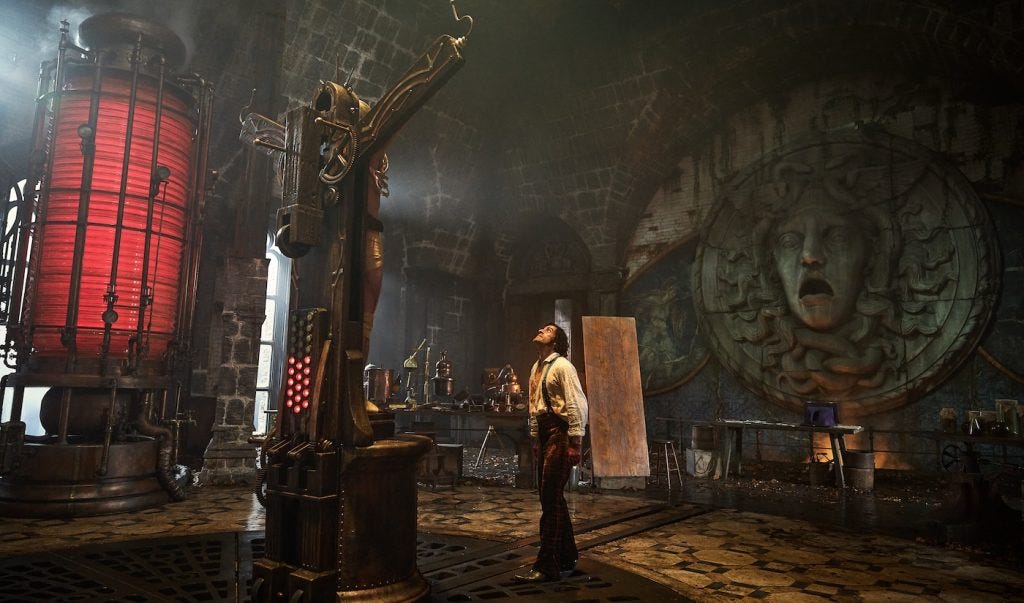
Guillermo del Toro has a fervid love for Frankenstein. We hear whispers and symbolism of this in his cinema (think The Shape of Water and Pinocchio). His Frankenstein is a story of creation. Of God and the patriarch. Did Adam want to be created in the first place and what would his existence be without Eve? Mary Shelley’s Gothic novel has been adapted once more and this version contemplates humanity, loneliness and remorse.
Victor Frankenstein (Oscar Isaac) is discovered by marooned sailors (Captained by Lars Mikkelsen) who quickly witness the monstrosity of the Creature (Jacob Elordi) as it races to capture his creator. Each character’s point of view is then explored, opening with a young Victor (Christian Convery).
Costumes in Victor’s stately formative scenes are rich in pomp and evoke comparisons to Barry Lyndon. Grand buildings and spacious rooms amplify Victor’s loneliness, a continuing theme in his story. His draconian father (Charles Dance) is stern and uncompromising. After the death of his mother (Mia Goth) he vows to eclipse his Dad, a skilled anatomist, and obsesses with resurrecting the dead. Victor’s formative years are important and illustrate his egotistical evolution.
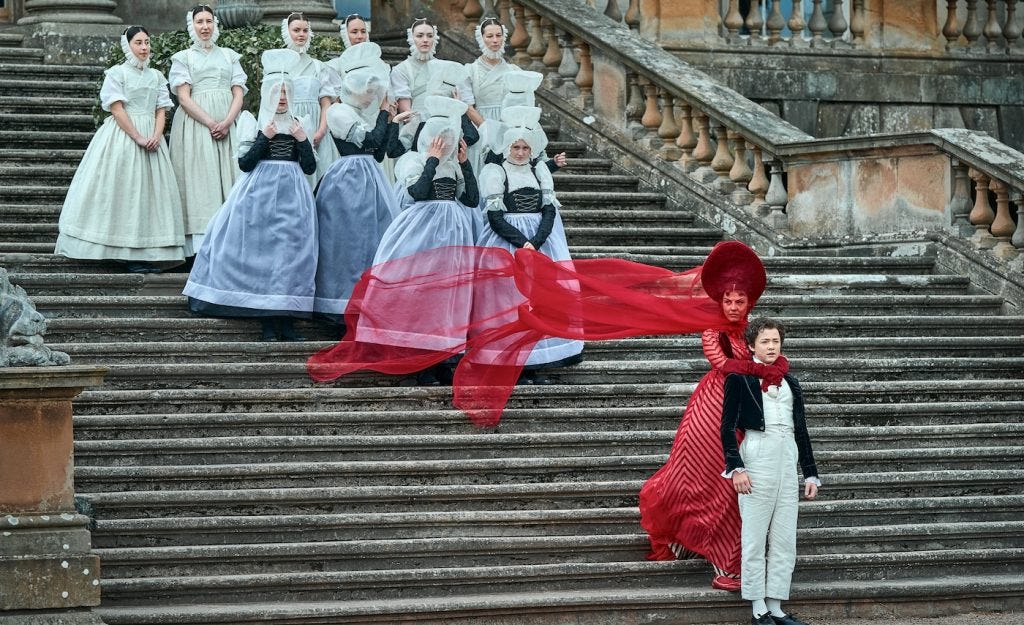
Unlike the original novel, Victor is not betrothed to Elizabeth (also Mia Goth). She’s engaged to his younger, more tender, brother William (Felix Kammerer). Elizabeth’s shifty uncle - Harlander (Christoph Waltz) - has an interest in Victor’s mad science and finances the experimentations. Tension between Victor and Elizabeth is central to the story; both are solitary figures but Elizabeth is pure and her morality denounces Victor’s megalomania at every turn.
Del Toro uses colour symbolically. Young Victor is dressed in angelic whites whilst his mother’s dresses are ominously cherry-red. Victor will wear red gloves to signify the fire, blood and danger he’s capable of whilst Elizabeth’s greens denote nature and purity; his lost mother.
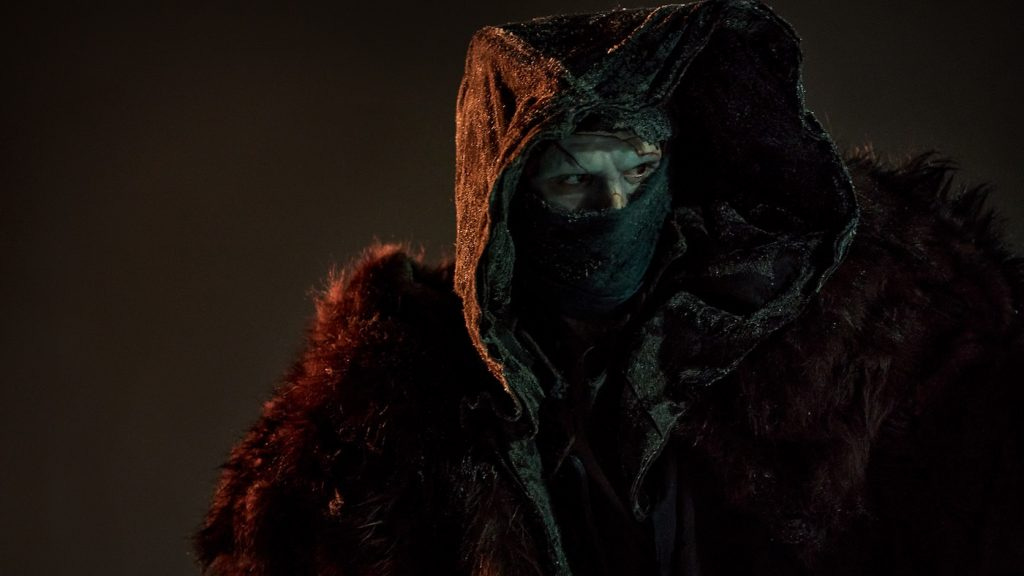
The Creature - a hodgepodge of bones, muscles and tendons from different human specimens - is a disappointment for his irritated creator who shackles him in a cellar. It can only utter “Vic-tor” and Elizabeth’s softness nurtures Eldri’s character. Victor is intent on destroying his creation but it manages to escape (during some questionable CGI moments) and the story is continued from the Creature’s point of view. Elordi’s performance from here on is absorbing. The story has so far concealed the Creature and loitered too long on Victor so we’re now receptive (and relieved) to hear his account.
The Creature finds shelter in a forest, hiding away in a family home. Here he observes kindness, love, family connection and is befriended by a blind man (played by David Bradley, a catalyst for these scenes drawing an amusing resemblance to Game of Thrones. The Creature even develops an accent from “The North”). The Creature questions what being human means and why the world shuns someone in poetic ways:
“An idea, a feeling became clear to me. The hunter did not hate the wolf. The wolf did not hate the sheep. But violence felt inevitable between them. Perhaps, I thought, this was the way of the world. It would hunt you and kill you just for being who you are”.
The Creature is Adam without Eve. He can’t die but he’s powerless to live and demands Victor provides a companion for him. For all of the diligence in costume and make-up, it’s Elordi’s communication with his eyes that are stand-out in his performance. He moves between vulnerability and rage and this is crucial in how we sympathise with the Creature.
The finale is a hurried resolution and despite spending a lot of time hearing Victor’s story, the attempt to present him as honourable falls short.
Victor and the Creature are left to reflect on the fangs of remorse but the lasting impression is on all the male characters and even del Toro himself. Grown men with Daddy issues.
"Grown men with Daddy issues" is actually the first thing I thought of as Victor began to mistreat the Creature! What is interesting is that, in the book, Victor's father was incredibly loving, perhaps meant to contrast with Victor's treatment of his own Creature
I'm a sucker for color stories/symbology and enjoyed following the red arc of Victor's wardrobe: mom's dress billowing around V in his "angelic whites"; the bloody handprint on the back of his shirt. Following that scene, V begins wearing red cravats (neckcloth?) and later the gloves. Thanks for sharing your thoughts--it's been fascinating reading so many varied opinions and noticings.