
The Running Man (2025)
★★☆☆☆


The eighties produced a particular type of neon-bathed cinema, peppered with cheesy quotes and corny acting. The original Running Man (1987) epitomised this era with Arnold Schwarzenegger’s mantra “I’ll be back” before he combats a set of villainous bruisers with names like Fireball, Buzzsaw and Dynamo; the latter brawler, wrapped in colourful lighting, would sing opera pieces as he electrocuted contestants. In Running Man (2025), Edgar Wright (Baby Driver) picks up the reboot baton and delivers a movie lacking the imagination of its forerunner.
Glen Powell plays an enraged Ben Richards, who’s been fired from various jobs for acts of abomination against a totalitarian state and is desperate to buy medicine for his sick daughter. Megalomaniac TV producer Dan Killian (Josh Brolin) tries to convince Richards to join The Running Man game show and he’ll win $1 billion just as long as he can avoid being killed by “The Hunters” (a group of elite hitmen) within 30 days. Richards was born to run, and reluctantly commits to the show with two other contestants.
The movie shuffles along but Powell’s energy is flat out impressive and conjures up comparisons to Tom Cruise’s accomplished Mission Impossible performances (before shooting started, Powell even received advice from Cruise on looking cool whilst running).
Wright’s adaptation, set in a dystopian 2025, is based on Stephen King’s novel and is closer to the original story elements than the 1987 version. The hunt for Richards takes place in the real world and he needs to evade surveillance of a Big Brother state and members of the public, who are active participants in the game. Everyone is hot on his heels and help is received from quiet revolutionaries (including Michael Cera) who see an agitated Richards as a catalyst for change.
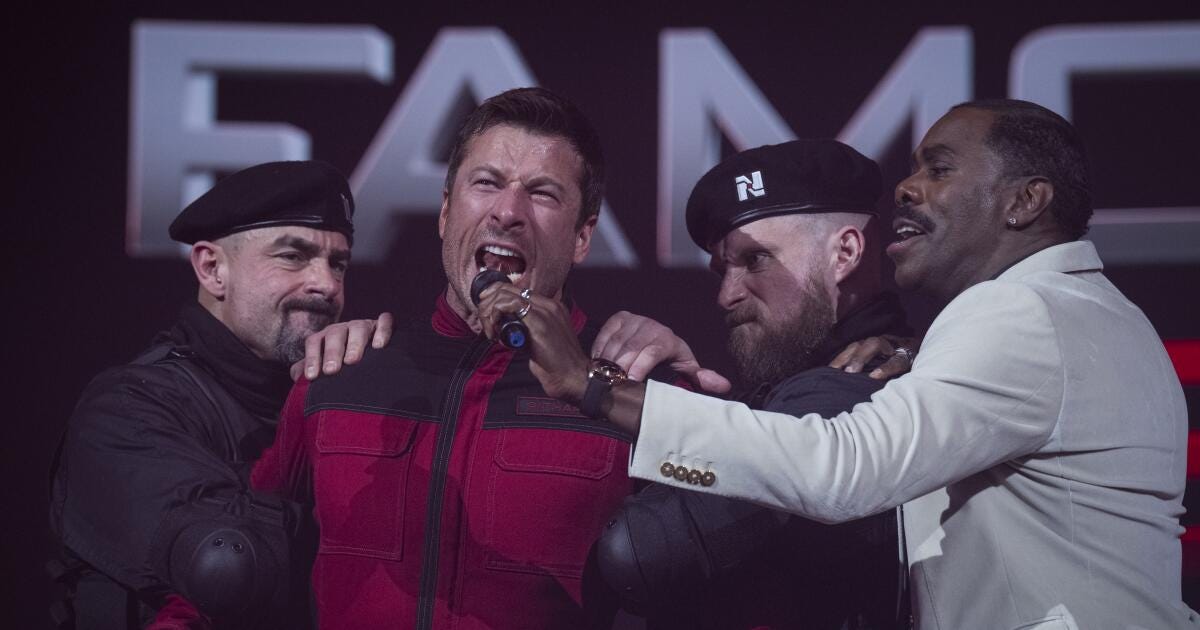
The sporadically entertaining film is most enjoyable when Richards is playing chase. The bulk of the other scenes, which include some stilted dialogue between Richards and his wife (Jayme Lawson) and a quasi-Kardashians character, are unconvincing in their attempt to deepen the storyline.
Flying cameras provide an omnipresent perspective for the TV show, hosted by Bobby T (Colman Domingo), that enable dialogue between Richards and a viewing public. Contestants of the game show are required to record a video message every day, which provides Bobby T and Killian with an opportunity to edit his words (think deepfake) for propaganda as Richards appears to become a symbol of hope for the masses.
1987’s Running Man might not have set the world alight but it worked by staying in its lane. It was so bad it was good but Wright’s modern take can’t keep up with it, despite the best endeavours of Powell. A fidgety ending to the story rushes around and provides a punchless impact as it crawls to the finish line.