
The Bride! (2026)
★★★★☆ | Gyllenhaal's bold approach imagines a bride through Mary Shelley's eyes

For Frankenstein film fanatics, The Bride! could seem like a continuation of Guillermo del Toro’s Frankenstein which ended with The Creature wandering into the abyss for all of eternity. But it’s not. Maggie Gyllenhaal places her monster, known as Frank (Christian Bale), in 1930s Chicago as he searches for a cure to his loneliness. The latest cinematic adaptation of Mary Shelley’s 1818 novel is tonally different from del Toro’s film. The Bride! has its women front and centre.
The film is analogous to James Whale’s 1935 The Bride of Frankenstein, with Bale’s stitches and flat-top square haircut evoking Boris Karloff’s appearance whilst Jessie Buckley’s electrified frizzled hair nods to Elsa Lanchester’s, who played the dual role of Mary Shelley and the monster’s mate. Buckley goes one further here in playing an additional character, Ida, who provokes mafiosi and is killed before becoming The Bride.
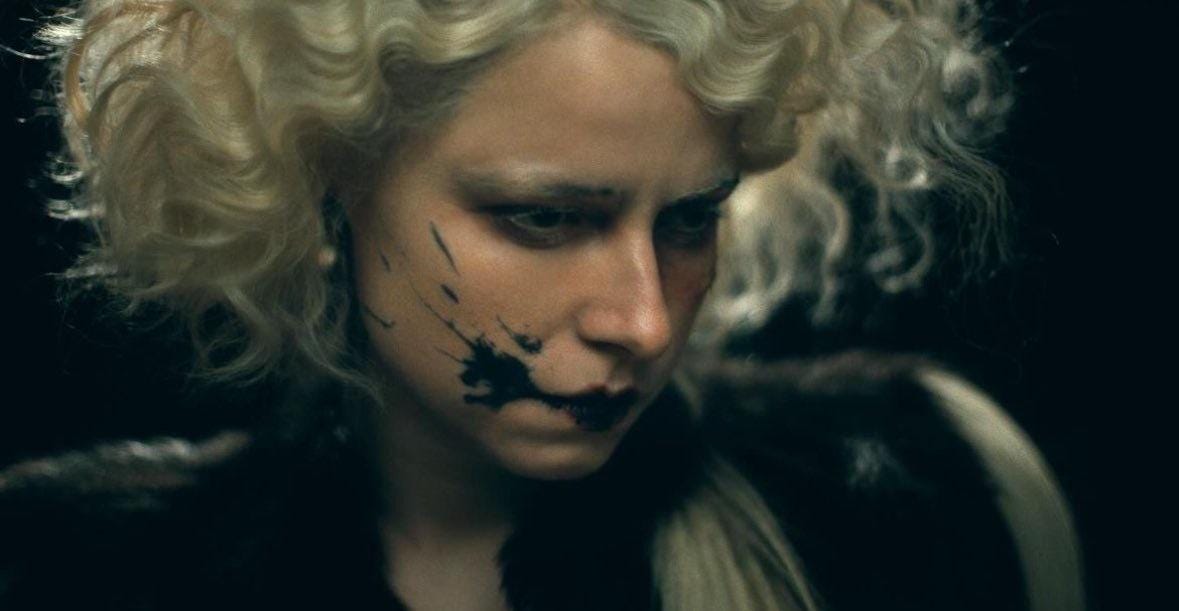
Frank finds and convinces Dr. Euphronius (Annette Bening) to cure his loneliness by making him a companion and they soon dig up Ida from her grave and revive her. The Bride is alive. Upon awakening, she spits out black chemicals that stain her skin, giving her a distinctive and symbolic look.
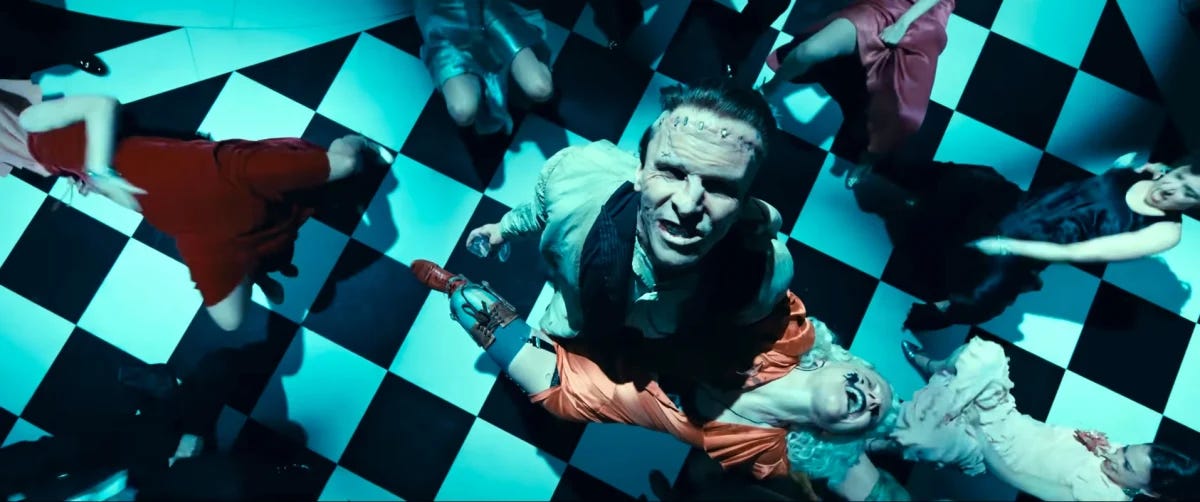
There are some nicely shot and choreographed dance scenes captured by cinematographer Lawrence Sher, as the pair boogie to “Puttin’ on the Ritz” before being hunted by a detective (Peter Sarsgaard) and his (more proficient) assistant (Penélope Cruz) in what can seem like a Bonnie and Clyde chase in the second part of the film. An early rave scene - with captivating strobe lighting - sets the tone for both characters when Frank reluctantly summons up his monstrous energy to dispose of men groping The Bride. Hildur Guðnadóttir’s vibrant score works well with the direction of the film as it carefully swerves in different directions, occasionally losing its footing.
Sher and Guðnadóttir both worked on Joker (2019) and given the many references to Batman projects (Bale, Gyllenhaal and Sarsgaard all in roles featuring the caped crusader), Buckley’s character is comparable to a female version of the Joker. She jolts between two roles: The Bride and Mary Shelley, with the author continually prodding her to summon a darker side. But here, Buckley could’ve gone deeper with her macabre to make this a more notable performance, given the mood of the movie.
The director’s modern take on the story, which hovers between black and white as well as full colour imagery, indulges itself with many references to Shelley. Rather than establishing Shelley’s influence from the start and making clear that The Bride is possessed, these scenes disrupt the flow of the story. But the 1935 film only had The Bride appearing for roughly three minutes and she was subsequently killed off by the monster for rejecting him. Gyllenhaal addresses this and then some by showing the marginalisation of women as well as a world where they soon rise up as The Bride sparks a revolution when she and Frank escape capture.
Cruz’s role as a smart assistant who is really the key detective, doing the real work for the subservient and passive Sarsgaard, works best when the audience is left to see the prejudices the character is exposed to, rather than the occasional stilted dialogue. The only decent male appears to be Frank and his early faux pas, where he assumes Dr. Euphronius to be a man, sets the tone for both Frank and the film. Bale doesn’t disappoint in showing Frank’s humane side with his performance but the centre stage is always with Buckley. Frank also turns out to be somewhat of a cinephile, and like most of them, that fact might also be his final undoing. But even for his gentleness he’s still keeping secrets from The Bride that haunt him in the final act.
It doesn’t always land, yet it’s interesting to hear Shelley’s perspective and the approach contrasts with del Toro’s 2025 Frankenstein. For all of his espoused love of the 1818 novel, the director still decided to end his film with a quote by Lord Byron. A male director quoting a male poet, when the basis of the film was built on a classic text from a woman, was not lost on many. Gyllenhaal’s approach is loud and clear. The Bride! is about Shelley and what Gyllenhaal thought the author’s take on Frankenstein’s companion might be.
Related reading:
Frankenstein (2025)

Guillermo del Toro has a fervid love for Frankenstein. We hear whispers and symbolism of this in his cinema (think The Shape of Water and Pinocchio). His Frankenstein is a story of creation. Of God and the patriarch. Did Adam want to be created in the first place and what would his existence be without Eve? Mary Shelle…
That choice of song must be a nod to Young Frankenstein.
https://substackcdn.com/image/fetch/$s_!4w4E!,f_auto,q_auto:good,fl_progressive:steep/https%3A%2F%2Fsubstack-post-media.s3.amazonaws.com%2Fpublic%2Fimages%2F0a2161b3-90d6-46df-9427-db02e495b951_800x1125.jpeg
Movies that have an exclamation point in the title should go to 11. (ie: Mother!) The Bride! does crank it one more, though there’s a few misfires. The music genre mixing felt off. But, better a ballsy misfire than boring complete sameness. Not since Mia Goth has an actress went full-out. Glad I saw it, especially the redefining of The Bride as not a bride to Frank. It’s Sid & Nance & Bonnie & Clyde & The Bride!